

One Wink Plot
One elderly widow, one pair of Purdeys and Warren Clarke going through the bins. Lovejoy discovers that in Suffolk even the rubbish is antique.
Review
We are, apparently, heading into heatwave number six of 2026. Six. They have stopped feeling like weather events and started feeling like a subscription I do not remember signing up for.
The heat has got to me, obviously, because I had the Clacton by-election filed in my head as something that had already happened. It hasn't. It was originally pencilled in for the sixth, Tendring District Council moved it back a week, and somewhere in that shuffle my brain quietly marked it done. It is, in fact, this Thursday. Count Binface remains on the ballot. I remain hopeful.
It has been a strange week regardless. Critical systems went down at work, and there is nothing like several hundred people discovering simultaneously that they cannot do their jobs to make a man long for the simplicity of a small antiques emporium in Suffolk. No incident calls, no status page, no war room. Just a shop, a kettle, and somebody's grandmother trying to sell you a toffee hammer.
And then the weekend, which I am spending reliving my youth over in nearby Lewisham, watching Grooverider. I have not seen him since I was a mop-haired teenager at Reincarnation at the King's Hall — rave geeks may look that one up at their leisure — and I regret to report that the intervening years have done their work. These days I bear rather more resemblance to something found at the bottom of a refuse sack.
Which leads us very nicely into Bin Diving.
The last episode had a two-million-pound bronze and a baronet. This one has a rubbish round in the rain, and is much the better hour for it. Nobody leaves Suffolk, and nobody tries to make Lovejoy into anything other than a man who knows what things are worth.
The opening has aged wonderfully. Nothing is sorted; it all goes into the same sacks, and the nearest thing Suffolk has to a circular economy is Warren Clarke going through them looking for Georgian silver. "We junk half our history every year," says Lovejoy. "We throw away millions." Recycling in 1991 appears to consist of putting absolutely everything in one bin and hoping the dustman has an eye.
He does. Brian Nunn's round carries tottin' rights, meaning first refusal on anything worth having, and Eric, who calls the practice scratching, has been quietly infringing them.
The double act that follows needs both halves, and Chris Jury is why it works. For a few scenes you could happily watch a spin-off consisting entirely of the two of them driving round Suffolk going through other people's bins. It is also one of the rare occasions Eric is shown to have a life of his own.
The plot arrives with Jane asking Lovejoy to do a favour for a friend, a sentence that should by now land like Columbo stopping in the doorway, apparently satisfied, and turning back to say there is just one small thing still bothering him. Mrs Jaglom needs ten thousand pounds for a leaking roof, her late husband having left his affairs in the usual condition, and her relatives are already helping themselves.
Did I mention the rain? The episode is drenched in it, and watching a Suffolk downpour during the worst drought in fifty years is its own small cruelty. Miriam sits out in it looking exactly as an old Morris Minor ought to look in a Lovejoy episode: wet. I have had Creedence Clearwater Revival's Have You Ever Seen the Rain? going round my head all week, which is not helping.
Upstairs there is a Gainsborough, or rather there isn't. It is Mary, Countess Howe, whose original hangs at Kenwood, and this one is a Victorian copy worth about £1,500 — fifteen per cent of a roof. Mrs Jaglom takes the news, addresses some remarks to her late husband on the subject of where he now is, and smashes it herself. I cannot remember the last proper attic scene before this one, possibly not since The Firefly Cage.
Dandy Jack somehow survives into Series Two, though only at the other end of a telephone. I have a theory about this: that the script was written with a proper part for him, that nobody thought to mention he had been quietly dropped after Series One, and that he was therefore demoted to a landline and left exactly where he was. This is as close to Geoffrey Bateman as we are now going to get, and it may also mark the start of a running count of the landline calls in this programme, which is going to be a large number.
Miriam breaks down in a ford that looks a great deal like the water Lovejoy and Eric first drenched Lady Jane in back in The Firefly Cage. Either a quiet callback or a location manager who had found somewhere good and saw no reason to go looking twice. Alexander is away, and Lovejoy ends up on Jane's couch. This becomes inconvenient the following morning, when Mrs Jaglom is attacked and two policemen want to know where he spent the night. He declines to tell them, because telling them would embarrass Jane. Just Lovejoy. Gentleman.
The policemen are DS Bentley, down from the Met to instil some rigour, and DC Hubbard. Neil Dudgeon plays Bentley straight and without humour, which is right, and plainly learning his trade two decades before Midsomer Murders handed him a county of his own. "I'm determined to nick you, Lovejoy." "I admire people who are big on principles." Brian, meanwhile, has established where Bentley lives, and raises the possibility of his bins going uncollected.
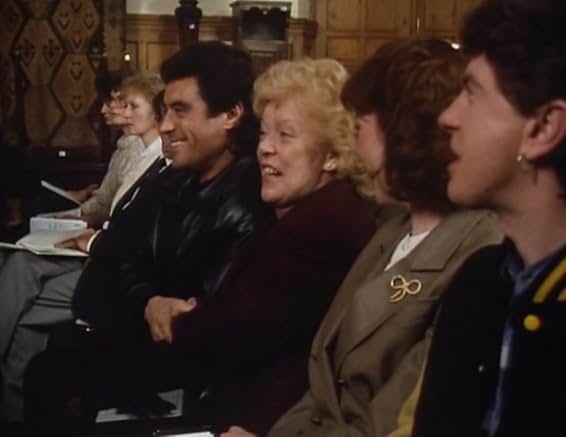
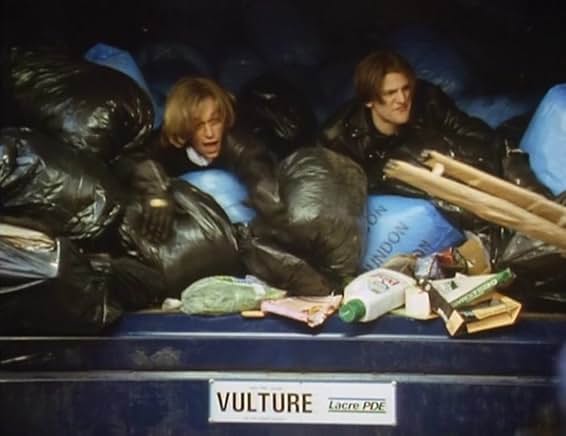
Catching the culprits takes plan B: poster a town, take a room at the Women's Institute, offer free valuations and wait. Three toffee hammers later, in walk two young men with a rhino horn they found on a tip: a pair of floppy-haired Hooray Henrys who, cast today, would be third and fourth Targaryen from the left in House of the Dragon. Lovejoy gives them twenty pounds for it. It has Major Jaglom's name on it.
What they were after is a matched pair of Purdeys, bought in 1938 and eventually fetching £30,000. Only a few episodes after The Judas Pair, valuable shotguns are back on the premises. Lovejoy appears to exist in a universe containing about six valuable objects, and sooner or later all of them come round again.
Then the ending, which is the best thing in it: the pair of them in the back of the lorry with the rubbish, and Brian working the compactor until a confession arrives.
Favourite Moment
Brian strolls into the workshop looking for Lovejoy and finds Eric pointing a gun at him instead. "Staffordshire figure or your life, you fat slug." Eric spends most of this programme being sent on errands and told to fetch things, so the sight of him holding up a man twice his size over a bit of Staffordshire is a genuine pleasure. Brian's only complaint afterwards is that Lovejoy really ought to instruct his staff about lines of demarcation.
Good Quote
"You're extracting a confession under duress, Lovejoy."
"Oh, well, do it your way then."
Guest Focus — Warren Clarke
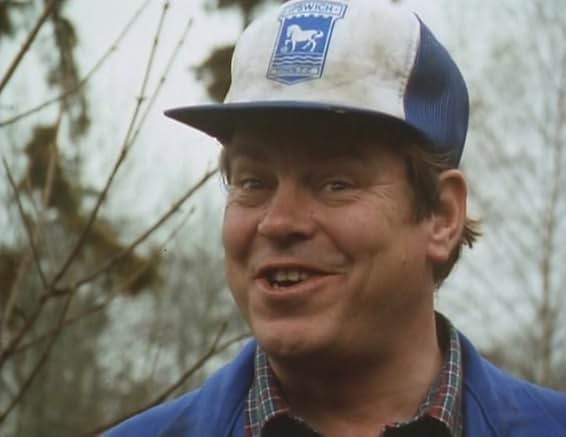
Warren Clarke arrives fully formed as Brian Nunn and should never have been allowed to leave. Brian is intimidating and funny in the same breath, knows his antiques, runs a small parallel economy out of other people's rubbish, wears a trucker's cap decades before that meant anything, and drives a lorry with horns and bears bolted to the front, like something that has wandered in from Toy Story.
He is also, without explanation, a serious cook: found mid-recipe worrying about his cream curdling, and late to the ambush because he needed a coconut. His wife is a midwife and prefers pie and a pint. Nobody remarks on any of it, which is exactly why it works. He never appears again, which is the one genuine complaint available against the episode.
The Divvy Verdict
Five out of five, with no Tinker in it. I docked The Italian Venus a star for that very absence a fortnight ago. I have no defence and I am not going to construct one.
It works because it is Lovejoy operating entirely within its natural habitat: Suffolk, antiques, rain, petty crooks, Jane, Eric, and eccentrics who were clearly there long before anyone thought to film them. The previous episode reached for something bigger. This one goes smaller and is far better for it.
And it has the sense to finish on the two Hooray Henrys picking through the rubbish themselves. A couple of bin divers.